
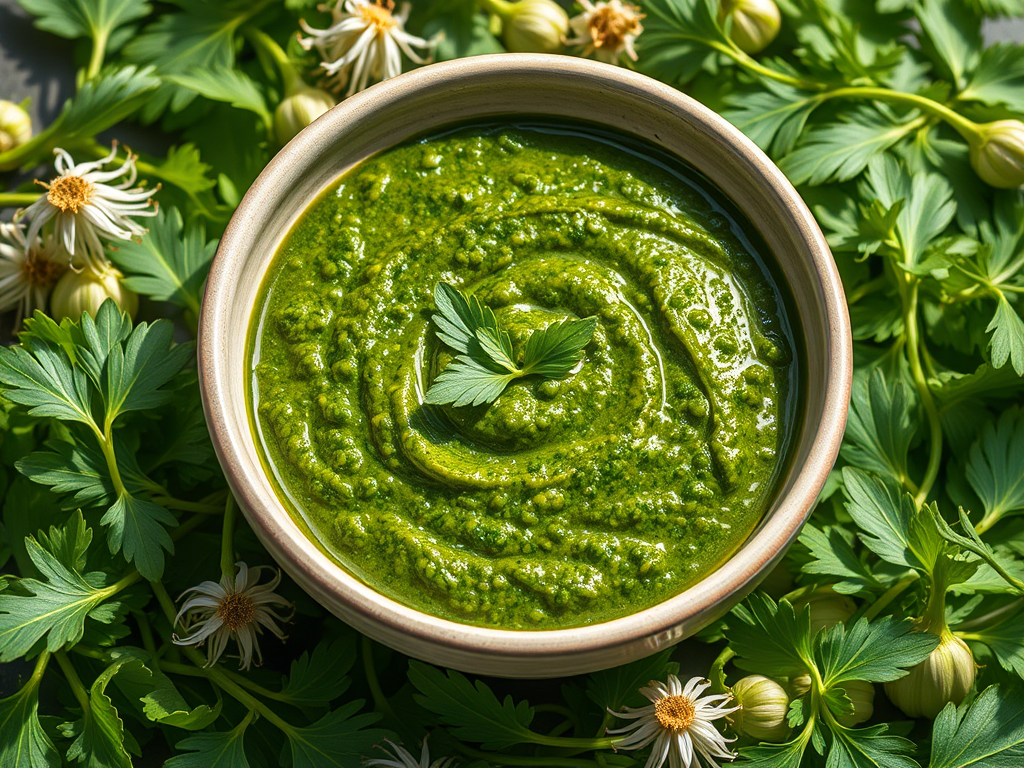
There’s something truly satisfying about crafting a dish from the wild ingredients that surround us. Foraging connects us to the land in a way that’s both grounding and rewarding. One of my favorite foraged recipes is a wild herb and nettle pesto – a vibrant, fresh take on the classic Italian sauce. This pesto is made using young nettles, wild garlic, dandelion greens, and fresh thyme – all of which are abundant in spring, making it the perfect way to celebrate the changing season.
Where to Find Your Ingredients
Foraging for wild greens is one of the easiest ways to immerse yourself in nature’s bounty. Nettle, often considered a weed, is a nutritional powerhouse, rich in vitamins and minerals. It thrives in moist, nutrient-rich soil, often found near streams, along forest edges, or in shaded areas. But be sure to wear gloves when harvesting – nettles pack a sting that disappears once they’re cooked or blended.
Wild garlic (also known as ramps or ramsons) is another common foraged green, known for its unmistakable garlic aroma. It grows in shady woodlands, particularly in early spring, and is perfect for adding a punch of flavor to dishes like pesto. If you can’t find wild garlic, young garlic chives make a great substitute.
I also love incorporating dandelion greens into this pesto. While many people see dandelions as a nuisance in their gardens, their leaves are nutrient-dense and offer a mild, slightly bitter flavor that balances the richness of the pesto. You can find them growing in lawns, fields, or along roadsides.
Lastly, fresh thyme, whether wild or cultivated, adds a lovely herbaceous note to the pesto. It’s easy to find in gardens or rocky, open woodlands if you’re looking to forage it.
Preparing the Pesto
Once you’ve gathered your foraged greens, the next step is to transform them into a flavorful pesto. I like to start by blanching the nettle leaves to remove their sting. To do this, I bring a small pot of water to a boil and briefly immerse the nettles for about 2-3 minutes. The leaves will turn a vibrant green, and the sting will disappear. After blanching, I drain the nettles and let them cool.
While the nettles are cooling, I prepare the other herbs. The wild garlic, dandelion greens, and fresh thyme go straight into the food processor, along with the nettles. I add pine nuts (or walnuts, depending on what I have on hand), which contribute a nutty richness to the pesto, and a couple of tablespoons of parmesan cheese for that savory, umami flavor.
The fun part is blending everything together. I drizzle in olive oil while pulsing the food processor, creating a smooth, spreadable pesto. If it’s too thick, I add more olive oil until it reaches the perfect consistency. A touch of garlic gives the pesto an extra punch, but it’s optional if you’re looking for something a bit milder. Finally, I season with salt and pepper to taste.
Enjoying the Pesto
Once your wild herb and nettle pesto is ready, the possibilities are endless. I love tossing it with freshly cooked pasta, letting the vibrant green sauce coat each noodle. It’s also fantastic spread on toasted bread for a quick snack or appetizer. You can drizzle it over roasted vegetables, stir it into scrambled eggs, or even use it as a topping for grilled meats. The fresh, herbal flavors of the foraged greens add a depth of flavor that’s unmatched by store-bought pesto.
Foraging with Purpose
What makes this pesto so special isn’t just the taste — it’s the process of foraging itself. When you step outside and begin gathering ingredients from the wild, there’s a sense of connection to the land that transforms the meal. Foraging forces us to slow down, to observe the seasons, and to appreciate the abundance that nature offers. Each foraged ingredient tells a story of the landscape it comes from, and that story is reflected in the food we create.
If you’re new to foraging, start with simple, easily identifiable plants like dandelion greens or wild garlic, and always be sure of your identification. It’s a good idea to invest in a reliable foraging guide or consult with local foraging groups to learn about safe harvesting practices.
Final Thoughts
Whether you’re a seasoned forager or a beginner, this wild herb and nettle pesto is a great introduction to cooking with foraged ingredients. It’s fresh, vibrant, and packed with nutrients, making it the perfect addition to any dish. By making something as simple as pesto from wild ingredients, you not only nourish your body but also forge a deeper connection with the natural world around you.
So the next time you’re out foraging, keep your eyes peeled for these wild greens – they’ll bring a taste of the forest to your table.




Leave a Reply